Don't Buy Until You Read This: Marshall Bromley 750 vs Dali Kupid
Introduction
Choosing speakers is one of the most consequential decisions for anyone building a listening environment, whether for music, movies, or mixed use. Two names that often come up in conversations about compact high-fidelity sound are the Marshall Bromley 750 and the Dali Kupid. Both appeal to listeners who want more than generic, thin-sounding bookshelf speakers, but they approach design, voicing, and real-world usability from different angles. This article compares the two with an eye toward what buyers actually care about: sound character, amplification needs, room compatibility, build quality, and long-term value.
Rather than a shallow side-by-side, this piece digs into real-world use cases — small living rooms, desktop setups, and two-channel hi-fi systems — and highlights practical trade-offs so that readers can match product strengths to their needs.
Product Overviews
Marshall Bromley 750 — Overview and Real-World Character
The Marshall Bromley 750 positions itself in the market as a compact yet muscular option that borrows the brand’s heritage in musical instrument amplification and translates it to home audio. Its industrial design leans into a vintage-modern aesthetic that fits well in rooms where form matters as much as function.
Sonically, the Bromley 750 is voiced to emphasize musical engagement: immediate midrange presence for vocals and guitars, a focused upper-bass to give rhythm instruments body, and a lively treble that projects detail without being clinical. This makes it an attractive choice for listeners who prioritize the emotive aspects of music — singer-songwriter, rock, jazz, and certain acoustic genres.
In practical use, the Bromley works well as the centerpiece of a 2.0 system in a small to medium room, and it pairs naturally with tube or solid-state integrated amplifiers that offer warmth and character. It is also an effective option for smaller home offices or creative spaces where a speaker’s look and feel contribute to the room’s identity.
Dali Kupid — Overview and Real-World Character
Dali’s Kupid is representative of the brand’s engineering emphasis on neutrality and wide dispersion. The Kupid aims for a balanced presentation across frequencies, delivering extended treble detail and a clean low-end that integrates well across a variety of listening positions. This neutrality makes it a flexible choice for multi-genre listeners and for room setups where off-axis response matters.
In real-world scenarios, the Kupid tends to shine in nearfield and small-to-medium room two-channel systems, as well as in compact home-theater front-channel roles. Its voicing makes it forgiving with different amplifiers and source equipment, including high-resolution streaming DACs, stereo receivers, and compact integrated amps.
Detailed Analysis
Design, Build, and Finish
The Bromley 750 continues the Marshall tradition of tactile controls and rugged finishes. Cabinets typically show attention to veneer and textured surfaces, with a slightly retro silhouette. Build quality is solid, and the physical aesthetic often contributes to the speaker being a prominent part of the room’s décor.
The Dali Kupid, on the other hand, prioritizes unobtrusive industrial design. The cabinet dimensions and driver layout are optimized for minimal diffraction and controlled dispersion. Finish options are generally restrained and modern, allowing the Kupid to blend into contemporary interiors rather than stand out.
Sound Signature and Tonal Balance
Marshall Bromley 750: Warm midrange, authoritative mid-bass, and a slightly forward presence. It is an engaging speaker that draws the listener into the performance, sometimes at the cost of absolute analytical neutrality. For listeners who want music to feel immediate and lively, this is a major plus.
Shop the latest Audio & Headphones picks on Amazon.
See Deals →Dali Kupid: Neutral, transparent, with strong imaging and consistency off-axis. It aims to reproduce recordings faithfully, offering more subtlety and air in the high frequencies. For critical listening or mixed-use systems where accuracy matters, the Kupid’s voicing is suitable.
Low-End Performance and Room Interaction
Neither speaker is a floorstander, so expectations should be set accordingly: both will require room support for deep bass extension. The Bromley 750 typically presents a richer upper-bass that can make music sound fuller in smaller rooms without a subwoofer. The Kupid tends to extend cleanly and evenly, inviting the use of a small subwoofer or placement near a wall to augment the lowest octaves when needed.
Amplification and Sensitivity
The Bromley’s voicing rewards amps that add warmth and a sense of drive; pairing with moderate-power amplifiers often yields satisfying dynamics. The Kupid is generally more amplifier-agnostic and will reveal more detail with higher-resolution sources and quieter backgrounds when coupled with a quality DAC or preamp.
Imaging and Soundstage
Both speakers are capable of convincing imaging when placed thoughtfully. The Bromley prioritizes a centered, performance-focused presentation that places vocals and lead instruments forward. The Kupid’s wider dispersion contributes to a broader soundstage and more consistent imaging across different listening positions.
Pros & Cons
Marshall Bromley 750 — Pros & Cons
- Pros: Engaging, musical midrange that suits vocals and guitars; distinctive design that doubles as décor; strong upper-bass presence giving perceived fullness in small rooms; pairs well with warm-sounding amplifiers.
- Cons: Not strictly neutral — may color some recordings; limited deep-bass extension without a subwoofer; less forgiving in very revealing systems where analytical transparency is required.
Dali Kupid — Pros & Cons
- Pros: Neutral, detailed voicing suitable for mixed-genre listening; excellent dispersion and imaging; flexible partnership with a wide range of electronics; restrained design that suits modern interiors.
- Cons: Can sound leaner or less immediately engaging to listeners seeking warmth; requires careful placement for best bass performance; might benefit from a subwoofer in larger rooms.
Comparison Table
| Category | Marshall Bromley 750 | Dali Kupid |
|---|---|---|
| Primary Strength | Musicality and midrange presence | Neutrality and dispersion |
| Ideal Use Cases | Vocal-forward music, living rooms, stylish desktops | Two-channel accuracy, mixed-genre listening, home theater fronts |
| Design Aesthetic | Retro-modern, decorative | Minimalist, modern |
| Room Compatibility | Small to medium rooms; benefits from near-wall placement | Small to medium rooms; wide dispersion helps larger seating areas |
| Amplifier Pairing | Sounds best with warmer-sounding amps; tolerant of tube pairing | Reveals source quality; pairs well with neutral amplifiers and high-quality DACs |
| Bass Performance | Full upper-bass; moderate low-end extension | Clean, controlled bass; may need sub for deep extension |
| Audience | Listeners seeking emotional engagement and presence | Listeners seeking neutrality and accuracy |
Buying Guide — How to Choose Between Them
Choosing the right speaker depends less on brand and more on matching product attributes to the intended environment and listening priorities. Below are concrete checkpoints to guide the decision.
1. Define the primary use case
If the speaker is for casual music listening in a living room where the speaker is also a design element, the Bromley 750’s midrange-forward presentation and distinctive styling make it a compelling option. If the goal is accurate two-channel playback for mixed genres or a front pair for home theater, the Kupid’s neutrality and dispersion give it an edge.
2. Evaluate room size and placement
Small rooms favor speakers that provide presence without needing extreme SPL. The Bromley tends to sound fuller in compact spaces. Larger rooms or setups with multiple listening positions will benefit from the Kupid’s wider dispersion. Both speakers benefit from placement experimentation: toe-in, distance from the front wall, and slight elevation changes can materially impact bass and imaging.
3. Check amplification and source chain
Consider what equipment will drive the speakers. If pairing with a warm-sounding integrated amp or tube rig, the Bromley will likely harmonize well. If the system has a high-resolution DAC and a neutral amplifier, the Kupid will communicate the extra resolution more faithfully. In both cases, auditioning with the user’s own electronics is ideal.
4. Think about future upgrades
If adding a subwoofer later is likely, choose the speaker that integrates best with a sub and the planned room acoustics. The Kupid often pairs predictably with small subwoofers because of its linear low-end. The Bromley, with its stronger upper-bass, may require more careful crossover tuning to avoid overlap.
Find top-rated Audio & Headphones products at great prices.
Shop Amazon →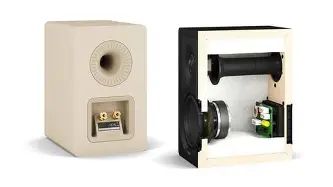
5. Consider aesthetics and furniture integration
Speakers are part of the living space. The Bromley’s visual personality can be a selling point or a drawback depending on taste. The Kupid’s understated look is easier to make invisible in many interiors.
6. Prioritize what matters most to the listener
Make a short checklist: Is immediacy and musical charisma more important than strict neutrality? Are imaging and off-axis consistency vital because listeners move around the room? These answers will steer the decision.
7. Practical audition tips
- Bring familiar tracks that span the frequency and dynamic range you care about (acoustic vocals, orchestral, rock, and electronic examples).
- Listen at realistic volumes for your room — a speaker that sounds great at low levels but distorts or loses poise higher up might not be ideal.
- Test with your amplifier or a similar unit; a speaker’s character can change noticeably with different powerplants.
- Try different placements in the room to discover whether you prefer the speaker’s direct sound or a more ambient presentation.
Real-World Use Cases
Several buyer archetypes illustrate how either speaker can meet real needs:
- The Apartment Enthusiast: Someone living in a small apartment who wants a compact system that sounds full at moderate volumes. The Bromley’s mid-bass warmth makes it feel satisfying without requiring a subwoofer.
- The Critical Listener: A listener who enjoys a variety of genres and values accuracy will appreciate the Kupid’s neutral presentation and consistent off-axis response.
- The Media Multi-Tasker: A user who alternates between music streaming, TV, and gaming needs a speaker that performs reliably across content; the Kupid’s balanced voicing and dispersion are advantageous here.
- The Design-Minded Buyer: Someone who values aesthetics and wants speakers that contribute to the room’s decor may prefer the Bromley for its distinctive look.
Practical Considerations Before Purchase
Warranty, local support, and return policy matter. Buyers should verify service options in their region and read real-user feedback regarding long-term reliability. Acoustic treatments and speaker stands can often yield greater improvements than an incremental upgrade in speaker model — if a speaker is tested in an untreated room, consider budgeting for minor acoustic improvements too.

Also consider resale value and ecosystem: if the buyer later wants to expand into a larger two-channel or home-theater setup, selecting a speaker with known compatibility and supported accessories can simplify upgrades.
Conclusion
The Marshall Bromley 750 and the Dali Kupid are both compelling for different reasons. The Bromley excites with a performance-first, midrange-driven presentation and a strong design identity, making it a great fit for listeners who want an emotional connection with music and visual flair in their living spaces. The Kupid answers a different brief: accurate, consistent, and versatile sound suitable for critical listening, mixed-genre enjoyment, and multi-seat rooms.
Ultimately, the right choice depends on which qualities a buyer prioritizes: immediacy and presence (Bromley 750) or neutrality and dispersion (Dali Kupid). Matching speaker characteristics to room size, amplifier choice, and listening habits — and auditioning with familiar music — will lead to the best outcome. Thoughtful placement, appropriate amplification, and modest room treatment will unlock the most rewarding performance from either speaker, so buyers are encouraged to focus on the full system rather than relying on a single spec or brand name.